Podcast: Play in new window | Download
🎙️ Episode Overview
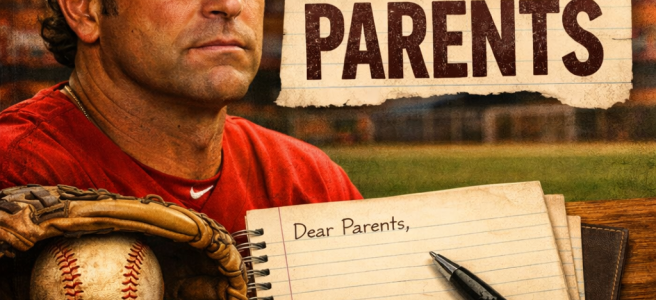
Addison and Coach T break down Mike Matheny’s viral “Letter to the Parents” (circa 2005–2006), unpacking timeless truths about parent involvement in youth baseball—from rec ball to high school to college.
⚾ What We Cover
🔹 Introduction (0:00–3:31)
The mission of Fungos & Footnotes: development, recruiting, mindset, leadership, and lessons that last beyond the final out
🔹 Cold Open (0:25–3:31)
Why Matheny’s letter still matters today
A must-hear for parents, players, and coaches at every level
🧠 The Real Issue: Parent Burnout (1:30–3:30)
Kids burn out when the game becomes about parent approval, not love of the game
Frustration from parents creates a link between performance and disapproval
Many players quit—not because they don’t love baseball—but to escape pressure
🚨 Core Message: It’s Not About You (3:32–4:56)
The biggest issue: parents making the game about themselves
Living through your child = 🚩
Shift the focus:
Team over ego
Development over outcome
Presence ↓ (less interference), not ↑
🧢 Coaching Philosophy & Expectations (4:57–9:28)
Coach T’s Preseason Approach
Equal playing time (when possible)
Quality > Quantity (4 games is enough for development)
No back-to-back pitching for youth arms
Parents stay out of the dugout
No coaching from the stands → players need a single voice
A clear “handshake agreement” with parents
Three Core Values
Teach the game the right way
Develop young men
Do it with class
➡️ Character > Winning
🏆 Championship Perspective (11:40–12:08)
Only a tiny fraction of Little League players ever reach MLB
Championships don’t define long-term success
Losses often teach more than wins
🤫 Silent Support (14:02–21:10)
The Most Challenging Section — But the Most Important
Be quiet, steady, and present
Loud encouragement can feel like pressure
No coaching from the stands
Replace critique with:
“I loved watching you play.”
What to Avoid
Yelling instructions
Pointing out mistakes they already know
Badmouthing coaches or teammates
What Actually Helps
Kids already know when they messed up
After tough games → give them space
Let them come to you
➡️ Best line you can say:
“I had fun watching you compete.”
⚖️ Umpire Etiquette (21:13–40:35)
Reality Check
Umpires will miss calls
There aren’t enough quality umpires
Yelling makes the problem worse
Coach T’s Philosophy
Never personal—always respectful
Sometimes arguing is about calming your team, not changing the call
Games are rarely decided by one call
Key Takeaways
“Umpires rarely determine the outcome”
Poor behavior drives umpires away from the game
You never know what someone else is carrying (road rage analogy)
💪 Player Development Happens at Home (40:35–48:36)
Coaches teach approach and thinking
Development happens through reps outside practice
The Reality
1–2 practices/week isn’t enough
Growth happens in the driveway, backyard, and cages
Coach T’s Mindset
“Nobody else is doing it today—that’s why we’re going to be better.”
Mental Development
Ask players:
“What were you thinking there?”
Teach decision-making, not just mechanics
Practice Formula (90 Minutes)
30 min: Fundamentals & reps
30 min: Game situations
30 min: Competitive/fun
🌍 Why This Letter Still Matters (48:36–52:32)
Context
Written during the rise of select baseball
Before social media amplified bad behavior
One of the first times someone said this out loud
Universal Truth
Not every parent struggles—but many do
The key question:
“Am I helping… or hindering?”
Defined Roles
Players → Compete & grow
Parents → Support & encourage
Coaches → Teach & lead
Umpires → Manage the game
➡️ Growth requires clarity and ownership
🎯 Call to Action
Read the full letter, linked here: https://dt5602vnjxv0c.cloudfront.net/portals/7572/docs/mikemathenylettertoparents.pdf
Talk about it with your family
Apply it
➡️ Be the parent your kid needs—not the one the game warns about
